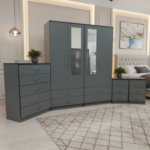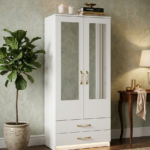
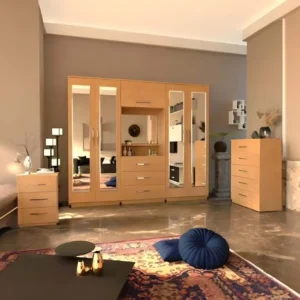
When choosing bedroom furniture, most people focus on style, size, and price—but very few actually think about how wardrobe doors are made. In Kent and across the UK, wardrobe doors are carefully engineered using modern machinery, skilled craftsmanship, and durable materials to ensure they last for years.
Understanding the manufacturing process not only helps you appreciate your furniture more but also helps you choose better quality products when shopping from places like Furnitures Sale.
In this guide, we’ll break down exactly how wardrobe doors are made in Kent, step by step, in a simple and easy way.
Step 1: Design and Planning
Every wardrobe door starts with a design. Manufacturers first decide:
- Door style (sliding, hinged, mirrored, etc.)
- Size and measurements
- Material type (MDF, engineered wood, or solid wood)
- Finish (gloss, matte, woodgrain, etc.)
Modern UK wardrobe production often uses digital design systems (CAD software) to create precise measurements before cutting begins.
This stage ensures that every door fits perfectly into the wardrobe frame, especially for made-to-measure designs commonly used in Kent homes.
Step 2: Choosing the Materials
The next step is selecting the right materials. Most wardrobe doors in the UK are made from:
- MDF (Medium Density Fibreboard)
- Engineered wood panels
- Veneered wood layers
- Aluminium frames (for sliding doors)
Manufacturers choose materials based on strength, durability, and cost. MDF is commonly used because it is stable and easy to shape, while wood veneers are added for a stylish finish.
In premium Kent furniture production, stronger materials are used for long-lasting and luxury wardrobe doors.
Step 3: Cutting and Shaping Panels
Once materials are selected, large machines cut them into exact sizes. This process is highly precise to ensure every door panel is identical.
The main parts created include:
- Door skins (outer surfaces)
- Core panels (inner structure)
- Side stiles and rails (frame support)
These components are carefully cut using industrial machines for accuracy and smooth finishing.
Even a small error in cutting can affect how smoothly the wardrobe door opens and closes, so precision is very important.
Step 4: Assembly of the Door Structure
After cutting, the different parts are assembled together. This is where the door starts taking its final shape.
Manufacturers:
- Glue internal layers together
- Press panels under controlled pressure
- Add reinforcement for strength
In engineered doors, multiple layers are bonded together to prevent bending and improve durability.
This step ensures the door remains strong even with daily use in busy Kent households.
Step 5: Adding the Door Style (Flat, Shaker, or Panel Design)
At this stage, the design of the door is created. Depending on style preference, manufacturers produce:
- Flat/slab doors (modern, smooth finish)
- Shaker doors (classic framed design)
- Panel doors (decorative structured design)
These styles are very popular in UK homes, especially in Kent where both modern and traditional interiors are common.
For example:
- Flat doors = minimalist modern bedrooms
- Shaker doors = classic, elegant interiors
- Mirrored doors = space-enhancing designs
Each style is shaped carefully using machines and hand finishing where needed.
Step 6: Sanding and Surface Finishing
After shaping, the doors go through sanding to make the surface smooth and ready for finishing.
Then, different finishes are applied such as:
- Paint (matte or gloss)
- Wood veneer coating
- Laminated surfaces
- Mirror panels for sliding wardrobes
This step is important because it defines the final look of the wardrobe door.
High-quality finishes also protect the door from scratches, moisture, and daily wear.
Step 7: Adding Hardware and Mechanisms
Once the surface is ready, hardware is installed depending on the type of wardrobe door:
- Hinges for hinged doors
- Sliding tracks for sliding wardrobes
- Handles or push-to-open systems
- Soft-close mechanisms
Modern wardrobe doors in the UK often include soft-close technology to prevent slamming and improve durability.
This is especially popular in Kent homes where homeowners prefer quiet, smooth furniture operation.
Step 8: Quality Testing and Inspection
Before leaving the factory, every wardrobe door goes through quality checks:
- Checking alignment and size
- Testing opening and closing systems
- Inspecting surface finish
- Ensuring durability standards
This step ensures that customers receive reliable and long-lasting wardrobe doors.
Only doors that pass all tests are sent to retailers or fitted furniture installers.
Step 9: Delivery and Installation
Finally, the finished wardrobe doors are delivered to homes or furniture stores. In Kent, many wardrobe doors are installed as part of:
- Fitted bedroom furniture
- Sliding wardrobe systems
- Custom storage solutions